Media

Newsletter

Reading
ECP Belgrade
7–10 September 2027

We’ll meet again…

…and we know where. And we know when.

We met atECP 2025 in Paphos
We met again atICAP 2026 in Florence
And now, we will meet again atECP 2027 in Belgrade

This time, we will meet in the historic heart of Belgrade — a part of the city that, like a rainbow, connects two rivers: the Sava and the Danube, and carries the traces of many cultures and civilizations that have shaped Belgrade. Perhaps there is no better place for us to meet than here.

There is much to meet about.

About how technology is transforming the way we live, work, and interact with one another.

About mental health, well-being, education, and human development.

About diversity, inclusion, human rights, and social justice.

About climate, sustainability, and the future of our communities.

About the changing world of work and how psychology can help us navigate uncertainty and change.

ECP is a gathering place for everyone.

For those putting the finishing touches on their abstracts.

For those curious about the future direction of psychology.

For those who wish to connect with the international psychological community.

For those seeking new ideas, fresh perspectives, and opportunities for collaboration.

And for those who simply want to take a moment to pause, listen, learn, and absorb the latest developments in psychology.

In short, this is about psychology and the kind of future we want to build together. Whether you come to present, to learn, to connect, or simply to be part of the conversation, there is a place for you in Belgrade.

And we know how!

Submit your abstract starting in September 2026 to be part of the program. Or simply catch the Early Sparrow, pack your bags, and join us in Belgrade.

Have you noticed?

The sparrows of all countries have already united. We are the sparrows, my friend. Our nest:
ecp2027.eu

About Last Congress
Issue 04

ECP 2027: Selected from ECP2025

Insights from “Transforming Psychological Science: The 2030 Agenda”.

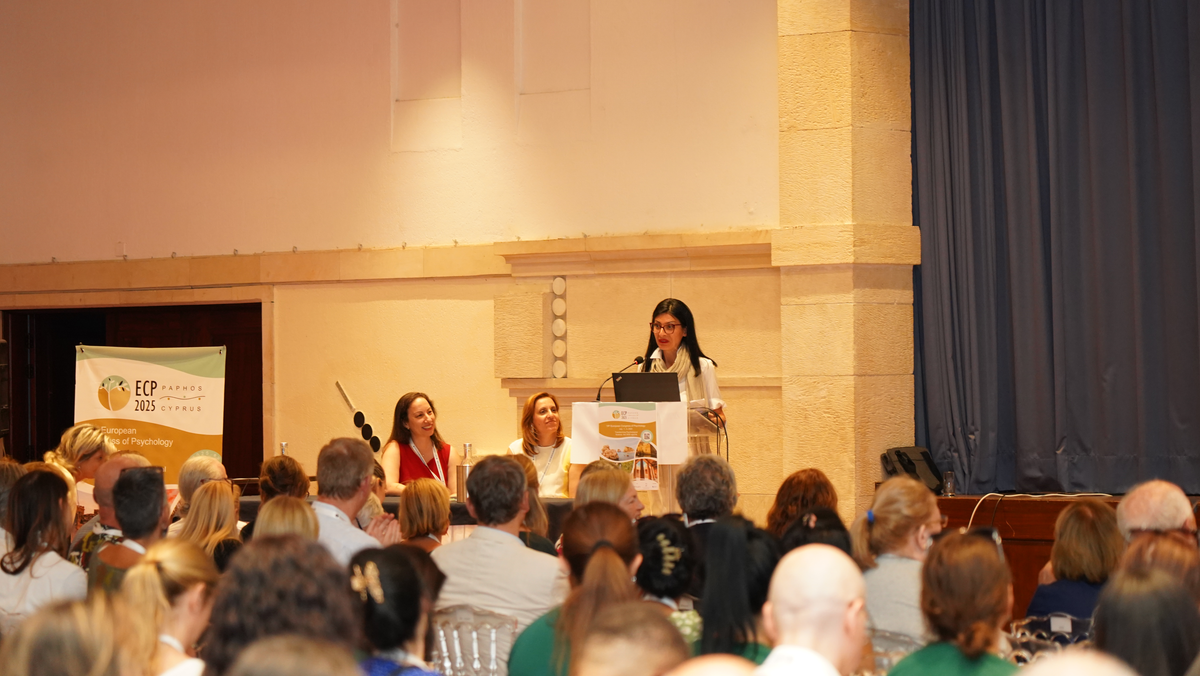
Congress hall lecture (ECP2025)

One central question emerged after processing the discussions at ECP2025: What are the chances of staying healthy, employable, and ethical in a world that is increasingly unsafe?
Growing Older, Facing Trauma but Staying Ethical and Resilient

Some people appear more resistant to today’s challenges than others. They manage to endure despite life transformations triggered by digitalization, aging populations, displacement, climate insecurity, and psychological vulnerability brought on by war, authoritarian regimes, or ecological devastation.

‘Whatever Works’ to Build Resilience

Technology is seen as a double edged sword — balancing between digital competence and digital dependency. Aging is framed as a challenge of life quality, oscillating between pathological decline and healthy longevity. Work life is becoming a matter of adaptability and flexibility, balancing employment with employability.

Ethics, meanwhile, are under pressure as battle lines blur, conflicts spill over borders, and fear and terror spread — contrasting sharply with efforts to protect psychological safety and address collective trauma.

Ultimately, what emerges from these discussions is the recognition that psychologists are striving to understand the regenerative capacity of human beings. Resilience appears as the essential foundation for sustainability and well-being. Yet the question remains: how do we achieve it? The search for strategies and tools to foster both personal and collective resilience continues, open to diverse approaches and solutions, leaving the impression that psychologists might fall on whatever proves effective (whatever works).

Announcing ECP2027

It will require us to reflect upon different traditions and approaches we have crafted throughout the history of psychological sciences, but also to be innovative in the development of new ones both at the conceptual and methodological level.

Therefore, the main topic of the ECP 2027 is “Psychology: responding to the challenges of technology and humanity (human society)”.

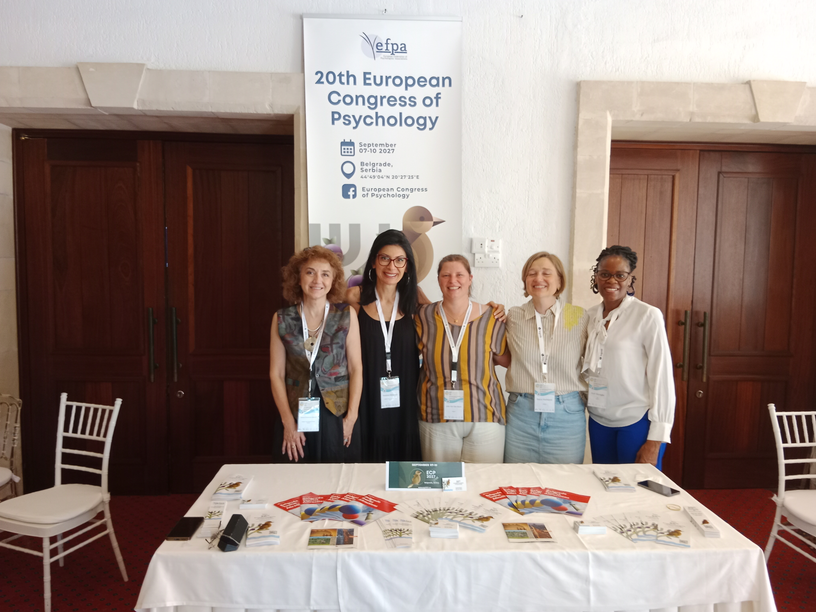
ECP2027 team group photo (ECP2025)
From the President of the Scientific Committee
Issue 03

A Place for Psychology Amid a Changing World

We are living in a historical moment in which established wisdoms and orthodoxies, even those of the recent past, appear increasingly fragile. The contemporary world is shaped by intertwined challenges: accelerating climate change, declining trust in democratic institutions, shifting dynamics of globalization and “slowbalization,” rapid technological change, armed and hybrid conflicts, large-scale migration, social polarization, the pervasive influence of social media, unresolved issues of data protection and digital privacy, and widening economic inequalities. Together, these processes are reshaping human experience in complex and often unpredictable ways.

From the President of the Scientific Committee

While such transformations raise fundamental questions for all sciences, they pose particularly profound challenges for psychology. As a discipline dedicated to understanding human thought, emotion, behaviour, and social relations, psychology is uniquely positioned to interpret these changes, anticipate their consequences, and support individuals, communities, and institutions in navigating uncertain futures.

Increasingly, this requires psychology to move beyond its traditional explanatory and applied roles and to engage as a World making science, the one that actively contributes to shaping more humane, just, and sustainable societies.

See you in Belgrade. Aleksandar Baucal
President of the ECP 2027
Scientific Committee

Against this backdrop, the European Congress of Psychology 2027 (ECP 2027) is conceived as a space for collective reflection and critical dialogue. It aims to examine psychology achievements, limitations, societal impact, and future directions, while fostering meaningful dialogue across diverse subfields and encouraging innovative theoretical, methodological, and practical approaches.

Contribute to ECP 2027

We warmly invite researchers and practitioners from all areas of psychology to contribute to ECP 2027, to be held in September 2027 in Belgrade, Serbia, under the theme Psychology: Responding to the Challenges of Technology and Humanity.

World map visual
ECP Belgrade
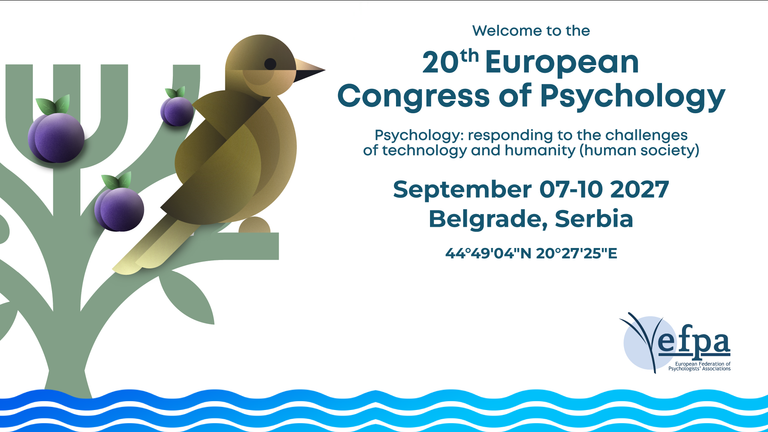
7–10 September 2027

About the Location

20th European Congress
of Psychology

Psychology: responding to the challenges of technology and humanity (human society)

ECP 2027 in Belgrade

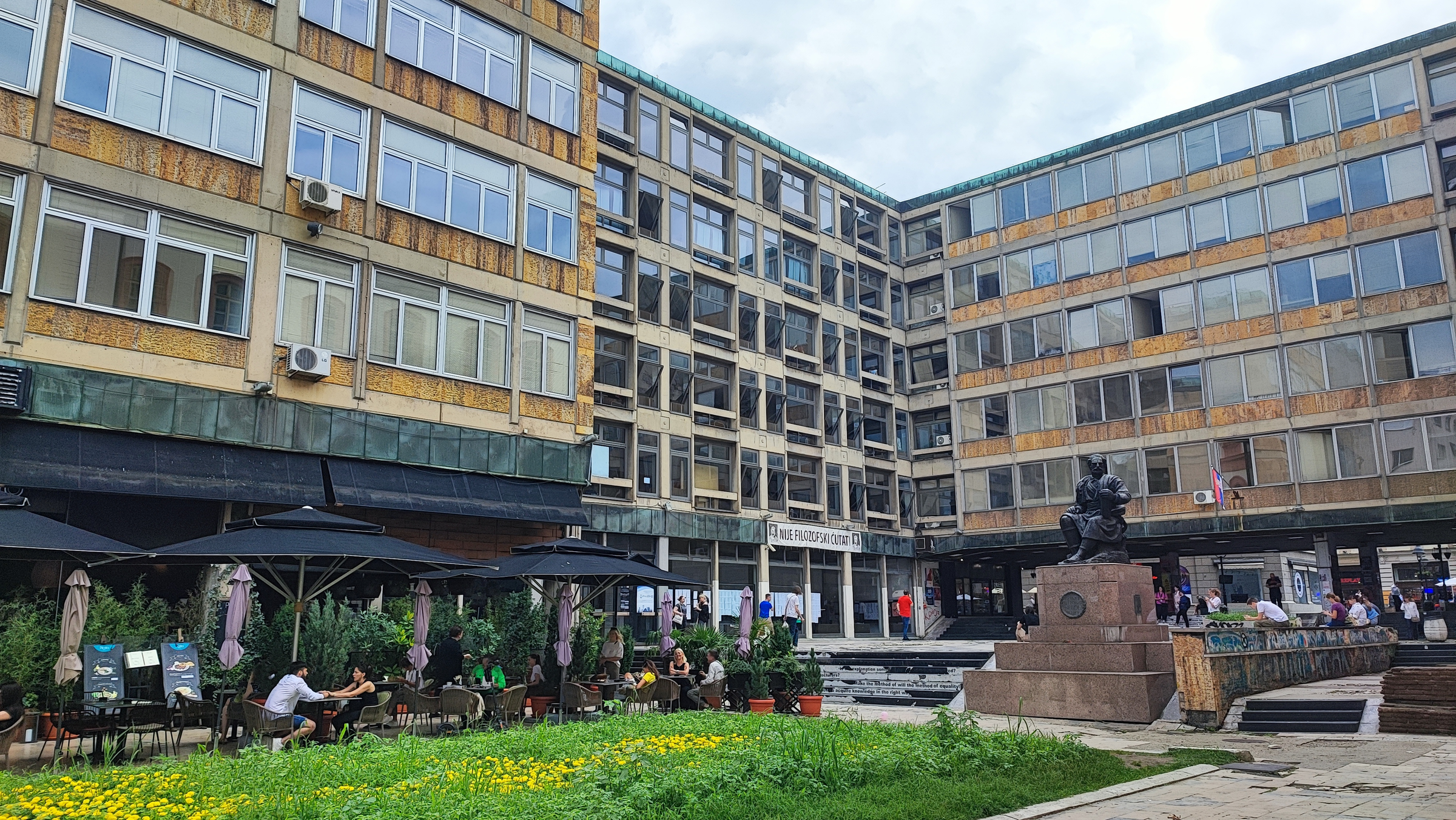
At the heart of the congress is the historic Faculty of Philosophy, built in 1838 as part of the University of Belgrade, located in the city’s central district, a space where long-standing academic traditions meet a vibrant and evolving urban landscape.

Faculty of Philosophy square (building & statue)

Just short walk away…

Kalemegdan Fortress rises above the confluence of the Danube and Sava rivers, offering a view shaped by centuries of cultural exchange and historical encounters.
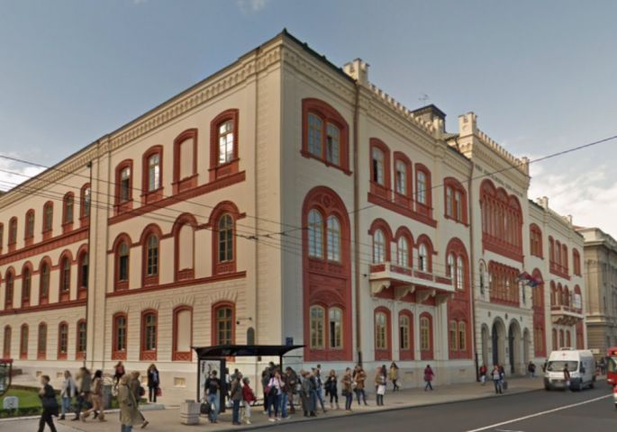

Faculty of Philosophy building

Nearby, Skadarlija — Belgrade’s historic bohemian quarter — invites you into a network of cobblestone streets, traditional restaurants, pubs, and artistic heritage, long associated with writers, artists, and intellectual life. Within the same area, institutions such as the Ethnographic Museum, an the National Museum of Serbia offer insights into the traditional practices, cultural and historical contexts that continue to shape the region.

ECP 2027 extends beyond conference sessions,
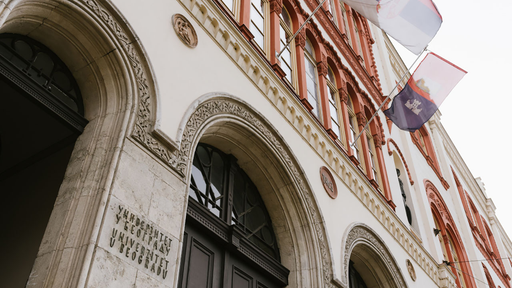
Building archway

creating an environment where academic exchange continues across the city. In Belgrade, discussions move fluidly between lecture halls, streets, and shared spaces, turning the congress into a lived, collective experience, where diverse European perspectives meet, interact, and evolve together (just like the confluence of Danube and Sava!)

Serbian Psychological Society
Issue 01
Text: Predrag Ilić, Licensed Tour Guide
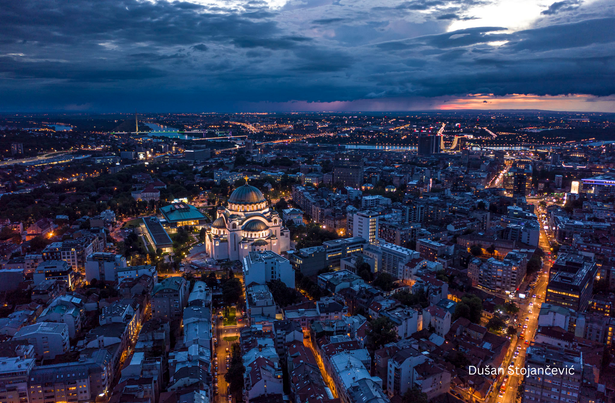
Photo: Dušan Stojančević, creativelight.rs

Belgrade at the Glance

Whatever a guest says about Belgrade, they will be right. It only depends on where their gaze happens to rest at the moment.

It seems that Belgrade cannot truly be described with words. This is a city that must be experienced. Whoever visits
Belgrade will fall in love with it and will return again.
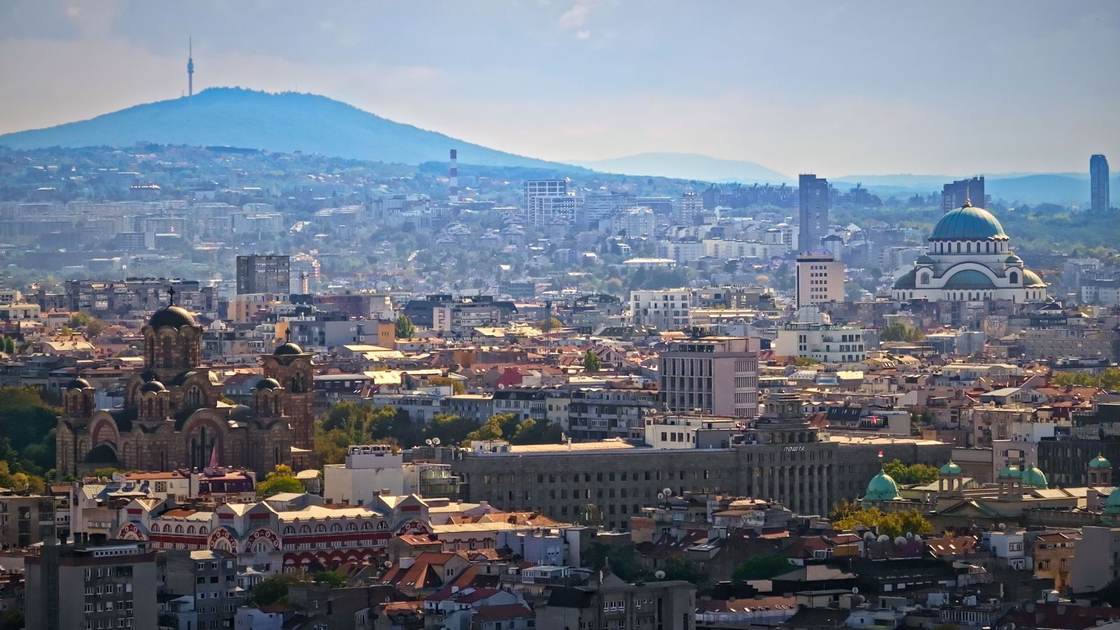

Belgrade skyline photo
(Dušan Stojančević, creativelight.rs)

“The story of Belgrade is the chronicle of a city that, throughout the centuries, every conqueror wanted exclusively for themselves, and that is why they all first destroyed it and then rebuilt it, again from the ashes. A fortress on the border between the European East and the Asian West, this city is also a watchtower above the waters of two great rivers, the Sava and the Danube, a viewpoint over the Pannonian plains, a gateway to the ever-threatening Balkans. It is a center of many different treasures and, as such, both challenging and attractive. As far as we know, it has been destroyed 37 times over the last two millennia. In some of the twenty centuries, therefore, several times over.” That means, several times in one century during some of these twenty centuries” — Svetlana Velmar-Janković, Gate of the Balkans

A crossroads older than memory

Belgrade has existed for around 2,300 years. A little downstream from it lies Vinča, an archaeological site dating back at least 5,000 years before our era — a true paradise for archaeologists and historians. It would take too long and become tiresome to list all the people and countries that once found themselves in Belgrade, so let us put it this way: almost everyone was here at some point. They came and went, while the city remained, bidding farewell to old conquerors and welcoming new ones, along with travelers, merchants, and pilgrims at the crossroads of Europe.
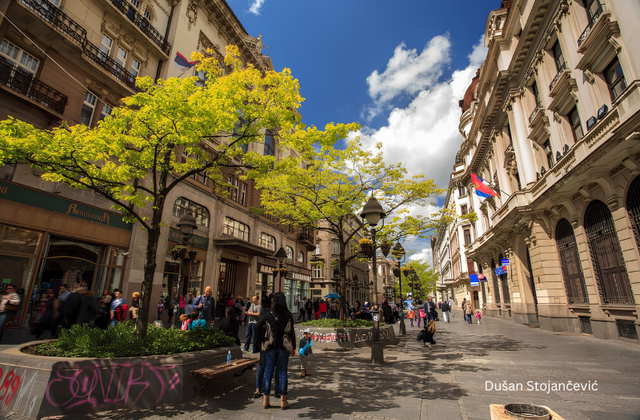
Where every wall tells another story

This colorful blend of cultures can be seen in the architecture, where every building is different, each in its own style. It can also be seen in the fortress walls, where Austrian red brick is intertwined with the massive stone blocks of Hungarian, Byzantine, and Serbian Belgrade, above Turkish cobblestones, on the foundations of Roman crossroads.

Whatever a guest says about Belgrade, they will be right

It only depends on where their gaze happens to rest at that moment. Beautiful? Yes. Not beautiful? That, too. Western? Oriental? A modern city? Eastern European? All true. New York? Berlin? Istanbul? Thessaloniki, perhaps? All of it fits, all of it is true.

Special and unique, each in their own way

Just like the city, the people of Belgrade are special and unique. And it is precisely this charm of Belgrade and its people that captivate everyone who comes to the city. Not only do people live on the banks of the Danube and the Sava, but seagulls live there as well.
Instead of a conclusion

“You are a crazy bird, seagull,” says a Belgrade poet. “Instead of living on the Mediterranean, you chose Belgrade, a hill of wars — why would you need that?” “Perhaps I am a crazy bird, but in that case, you and I have a lot in common. We chose Belgrade — the city of winds, of history, of good food, good people, and the most beautiful women.”

Archive

All issues

05

We’ll meet again…

Latest issue

Download PDF

04

Selected from ECP2025

Previous issue

Read on this page

03

Word of the president

Previous issue

Read on this page

02

About the Location

Previous issue

Read on this page

01

ECP 2027 in Belgrade

Previous issue

Read on this page